
The candy spot is fast-growing privateness bushes that gained’t get too large and take over your complete yard. Sure evergreens and columnar bushes have a restrict to their peak or a gradual sufficient development price that they don’t want fixed combating to maintain them compact – however they’re not too gradual to develop both.
The bushes under cowl a variety of sizes, climates, and conditions – from probably the most planted privateness tree in North America to a couple underrated however equally lovely selections. These bushes are compact, fast to mature, and add tons of privateness to your yard.
Article continues under
1. Arborvitae (Thuja occidentalis)
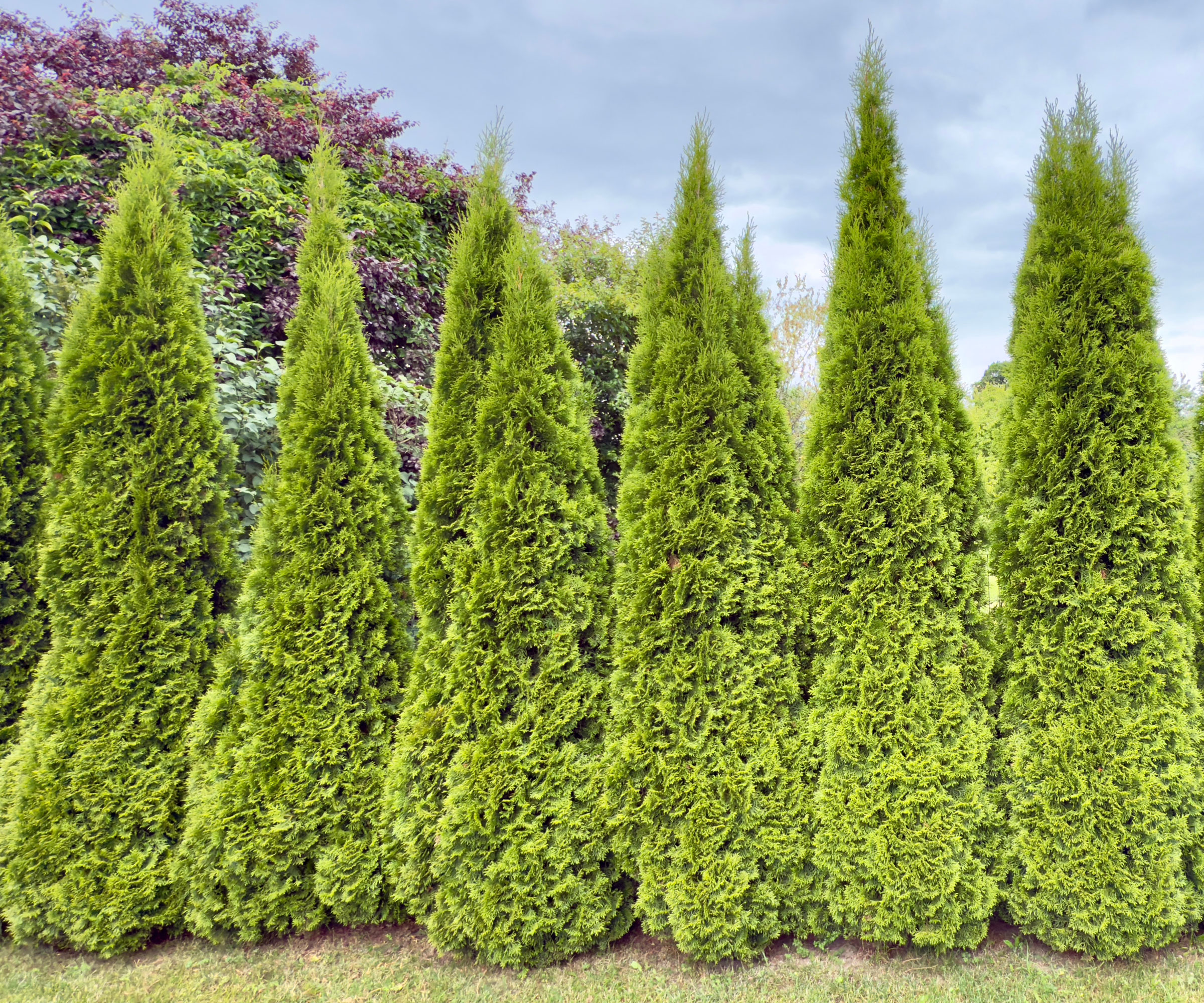
A compact arborvitae is a typical alternative for a fast-growing small privateness tree – and actually it’s laborious to argue with. This tree is ready to placed on round 1 to 2 toes (30-60 cm) a yr, but it surely caps out round 12 to 14 toes (3.5-4 m). It additionally tends to carry its pointed form with none pruning.
The winter coloration is price fascinated about when selecting an arborvitae selection. Quite a lot of cultivars flip bronze by December and keep rough-looking till spring, however the higher compact types maintain their inexperienced throughout winter, just like the ‘Emerald Inexperienced’ arborvitae from Quick Rising Bushes.
Mature unfold sits round 3 to 4 toes (1-1.2 m) huge, so a row at that spacing is prone to shut right into a stable display screen shortly. Hardy right down to zone 3, arborvitae handles clay soil higher than most conifers.
2. Columnar Juniper (Juniperus chinensis)
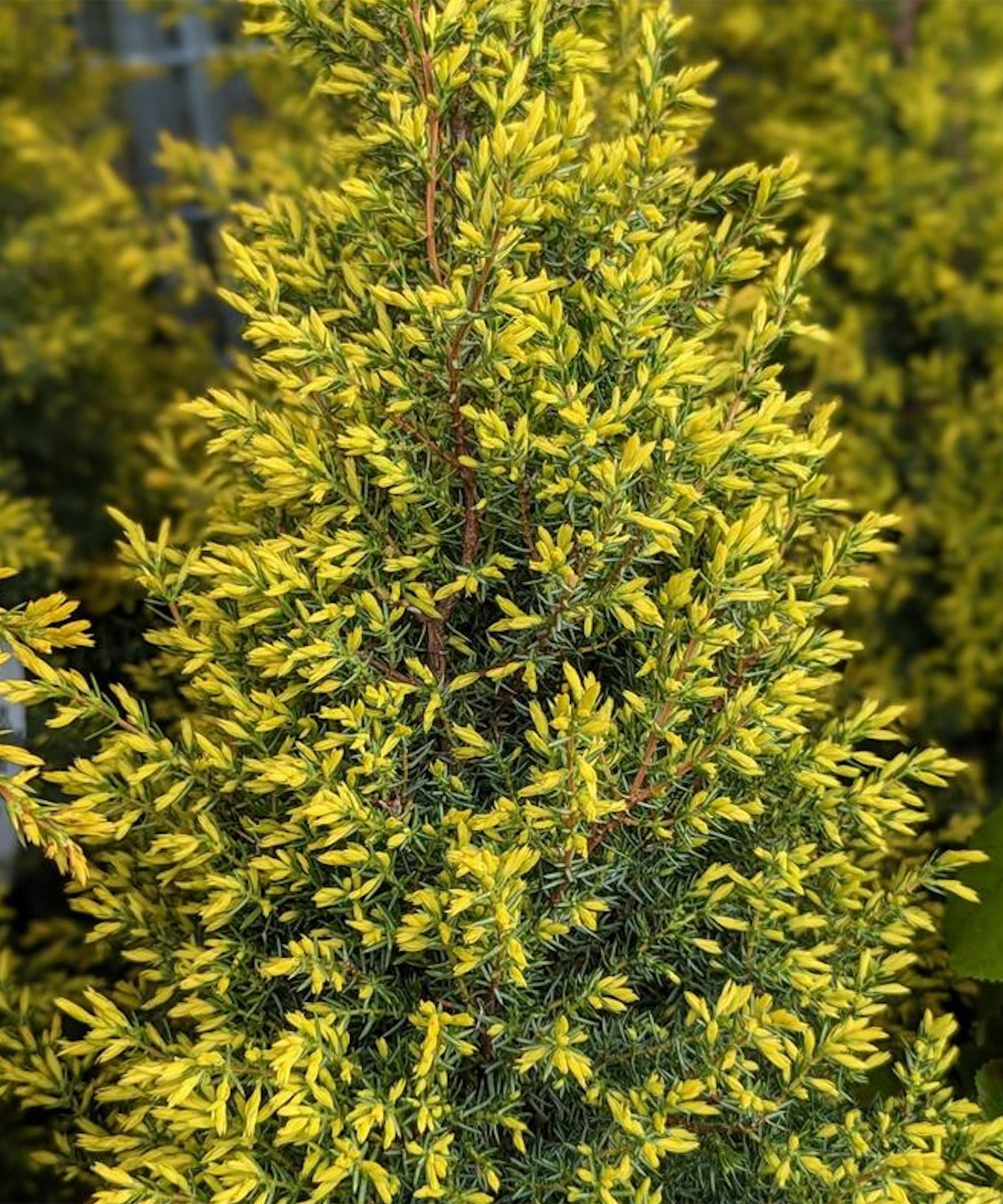
In case your yard is sizzling and dry, a columnar juniper tree is a good alternative. It grows 12 to 18 inches (30-45 cm) per yr – quicker than many bushes. Its mature dimension is 15 to twenty toes (4.5-6 m) tall by 4 to five toes (1.2-1.5 m) huge. Juniper stays inexperienced and dense year-round.
It is hardy in zones 4 to 9, which is broader than most arborvitae varieties, and juniper’s drought tolerance after institution is a real asset for dry landscapes. The columnar form means this kind of juniper can slot in slender entrance yards the place a wider tree would get crowded.
3. Columnar Arborvitae (Thuja occidentalis)
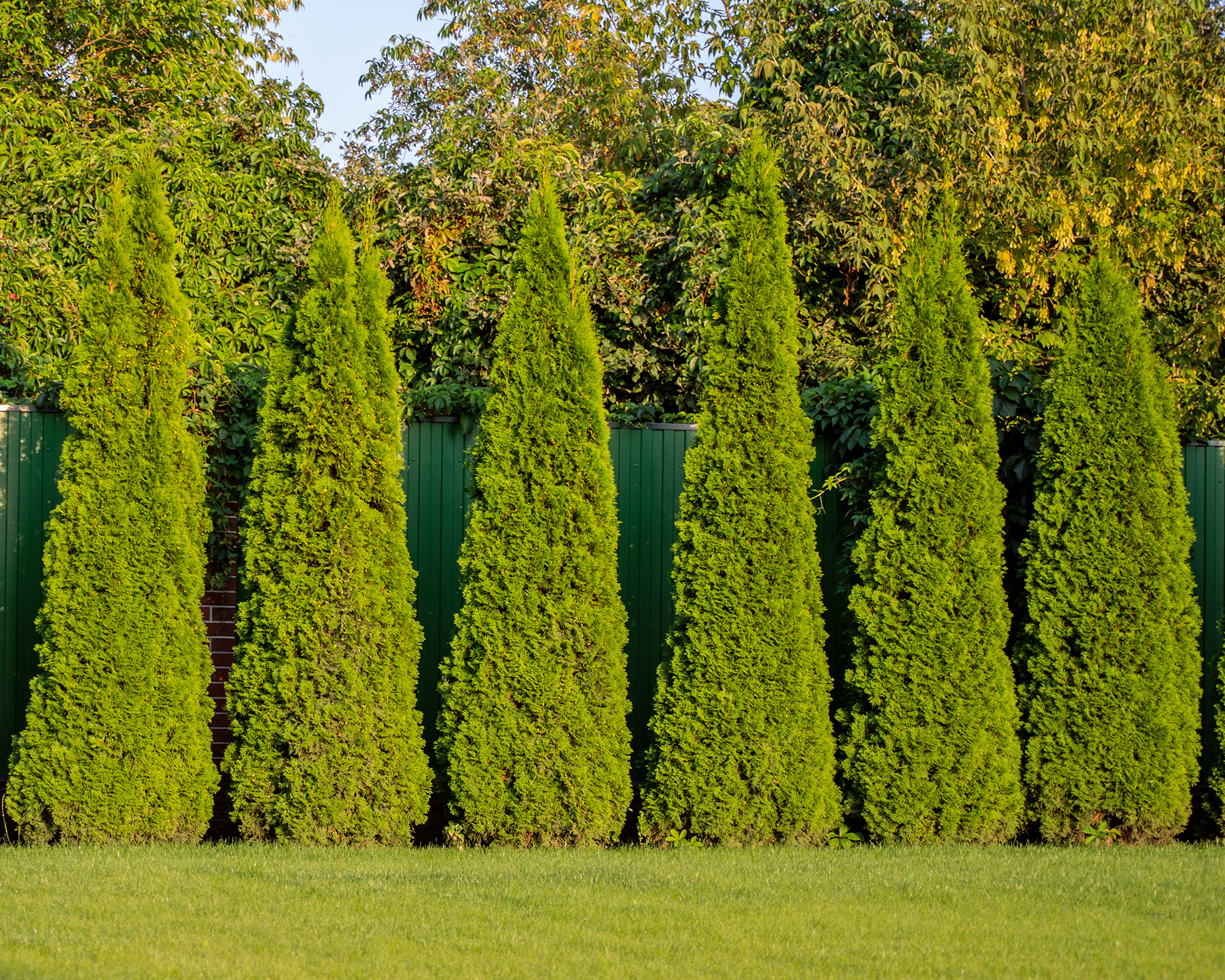
This is identical species as the usual pyramidal sort of arborvitae, however the columnar tree kind tends to remain noticeably slimmer. On a good fence line or in a slender facet yard, that small distinction issues.
Columnar arborvitae solely attain about 2 to three toes (60-90 cm) huge at maturity versus the 4 to five toes (1-1.2 m) width in your typical commonplace choice. This fast-growing privateness tree tops out round 15 to twenty toes (4.5- 6 m).
The foliage will typically carry a slight spiral texture that appears a bit extra fascinating than the flat uniform look of the usual sort. The distinction is delicate, however price it in a proper backyard setting.
Hardy in zones 3 to eight, columnar arborvitae deal with most soils effectively with out criticism. Most gardeners overlook this as an possibility, which is a disgrace given how effectively it matches into tight spots. Select a high-quality cultivar just like the ‘American Pillar’ arborvitae from Quick Rising Bushes for quick outcomes.
4. False Cypress (Chamaecyparis pisifera)
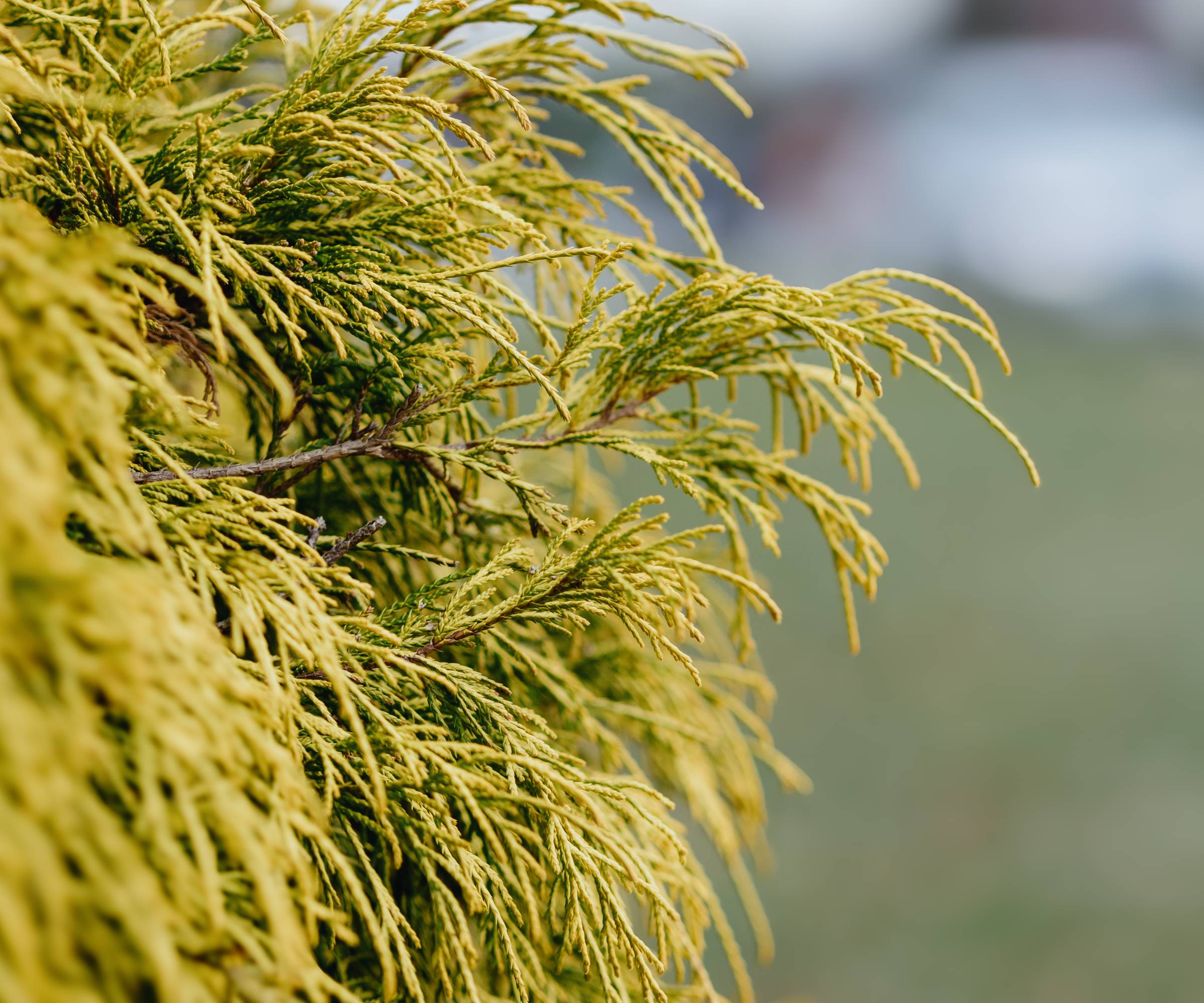
False cypress has a feathery texture and distinctive colours which can be fully totally different from the opposite conifers right here. If you happen to’re searching for fast-growing privateness bushes to plant near a path or a play space, the prickly foliage on junipers and arborvitae may be fairly disagreeable when folks brush towards them. False cypress doesn’t have that drawback.
This tree grows about 1 to 2 toes (30 to 60 cm) per yr and matures at 6 to eight toes (1.8-2.4m) tall by 3 to 4 toes (1-1.2 m) huge. It’s higher suited as a decrease screening hedge close to home windows or in small basis beds reasonably than as a full-height display screen.
False cypress is hardy in zones 4 to eight and prefers constant moisture. Their coloration, typically blue-green or gold, holds by winter and provides magnificence year-round. Store a wide selection of false cypress bushes and bushes from Nature Hills Nursery to search out the right one in your yard.
5. Cherry Laurel (Prunus laurocerasus)
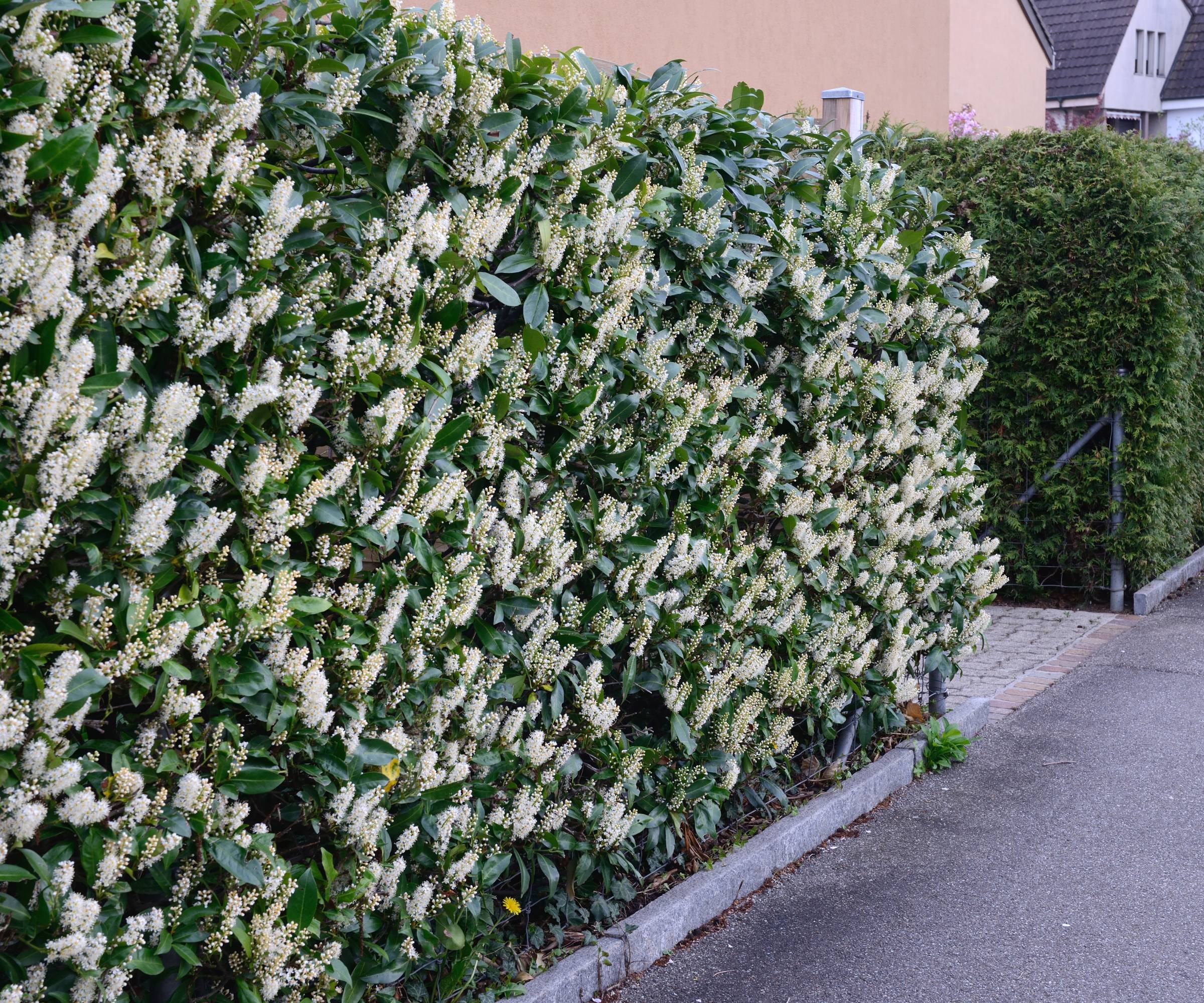
Cherry laurel grows quick – typically 2 to three toes (60-90 cm) a yr – and appears nothing just like the conifers on this listing. Its giant, shiny darkish inexperienced leaves create a lush display screen that reads extra like a correct hedge than a row of evergreens.
Cherry laurel matures round 10 to fifteen toes (3-4.5 m) excessive, takes an annual trim with out criticism, and is hardy in zones 6 to 9. Shade tolerance is basically what units the cherry laurel aside, although. Junipers and arborvitae flip skinny and patchy in shade gardens after a couple of seasons – and that drawback just isn’t straightforward to repair.
In case your fence line sits beneath a neighboring tree cover or runs alongside a north-facing wall, cherry laurel is commonly probably the most dependable possibility that may truly do effectively there. You will get cherry laurel crops in a variety of sizes from Backyard Items Direct.
6. Upright Holly (Ilex attenuata)
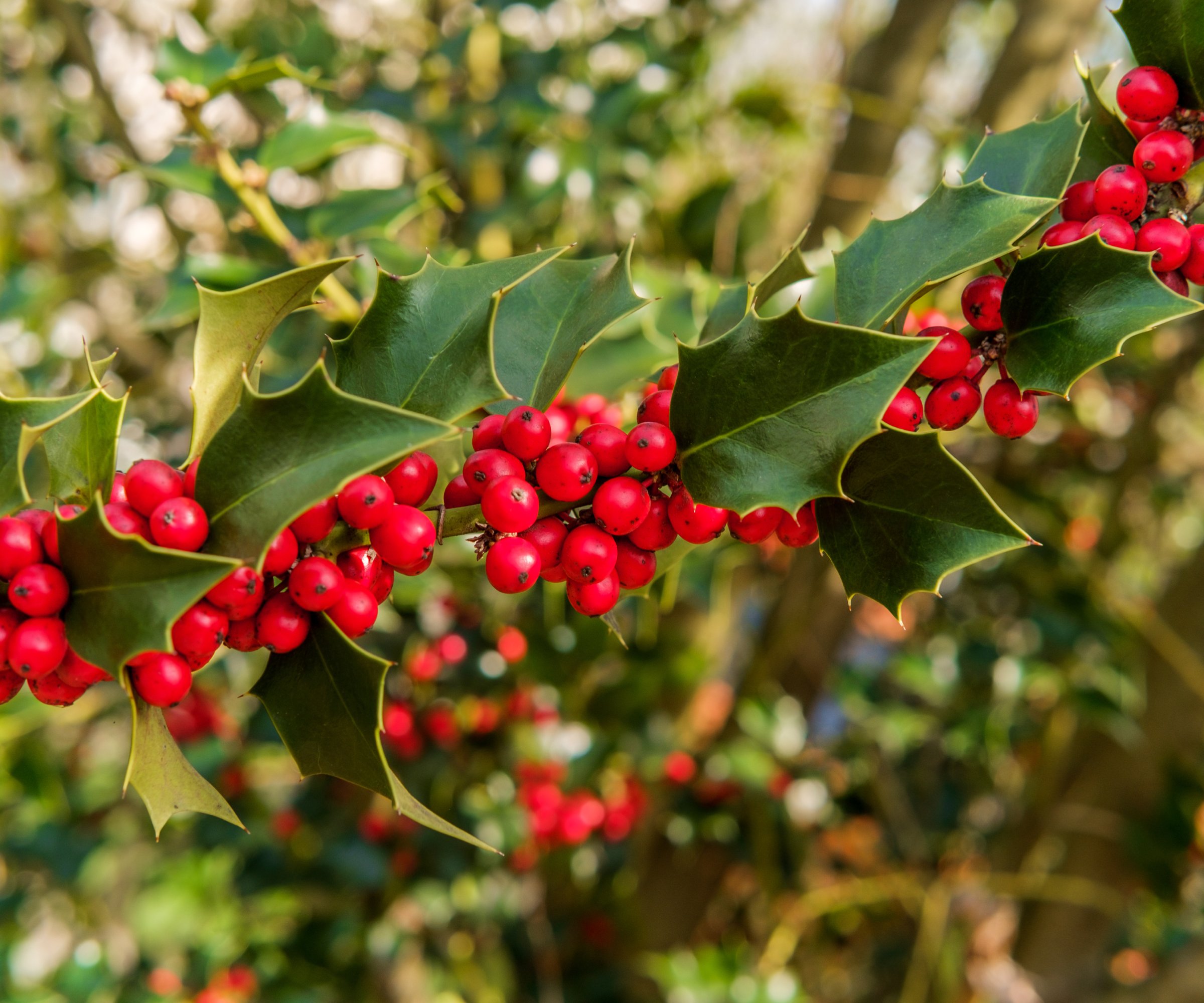
Holly generally will get a repute for being slow-growing, however upright holly strikes at a reasonably stable 2 toes (60 cm) of development per yr and reaches 15 to twenty toes (4.5-6 m) at maturity. It has a naturally slender, upright behavior that stays tidy with out a lot work from you.
Its darkish, spiny foliage screens effectively year-round and the pink berries in fall and winter give it an additional sparkle {that a} row of conifers simply can’t supply. These fast-growing privateness bushes are suited to zones 6 by 9 and are straightforward to determine.
A male holly tree improves berry manufacturing, although feminine bushes set some fruit on their very own most years regardless. For a display screen that appears good and offers tons of privateness, this may be probably the most underused possibility on the listing. This upright ‘Monarch Holly’ tree from Quick Rising Bushes is a regal alternative for any backyard.
7. Columnar Japanese Holly (Ilex crenata)

The columnar Japanese holly tree is likely one of the greatest choices for very tight areas. Measuring 8 to 10 toes (2.4-3 m) tall and barely 2 toes (60 cm) huge at maturity, this tree is ideal in tight planting strips or slender facet yards the place nothing else can presumably match. Development is extra average than the opposite bushes on this listing at simply 6 to 9 inches (15-23 cm) per yr.
The foliage stays dense from prime to backside with none pruning. This tree is hardy in zones 5 to 9, so it is a good possibility for all kinds of landscapes. Three or extra planted collectively make a correct privateness display screen. Planted by itself, Japanese holly reads extra as an accent tree than a barrier.